Discussions about the future of our world tend to focus on what might go wrong. Climate change, inequality, political instability, and technological threats dominate public discourse. While these concerns are valid, they are also limiting. A future framed only by fear leaves little room for agency or imagination. That is why I deliberately choose a different perspective: an optimistic, yet realistic, vision of what lies ahead.
Imagine the year 2100. The global population has reached its peak and is slowly declining. Prosperity is no longer measured solely by economic growth, but by well-being, health, and purpose. Society has shifted from ego to eco—from individual gain to collective balance. This is not wishful thinking, but the continuation of trends already unfolding today.
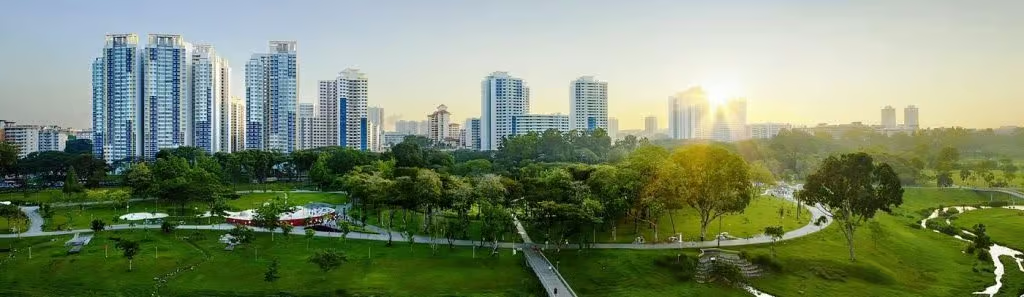
Violence is at historic lows, democratic rule of law has become widespread, and more people than ever live free from extreme poverty and insecurity. Cities are redesigned around human needs rather than cars. Parking lots have turned into parks, transportation is dominated by autonomous electric vehicles, and long-distance travel is fast, clean, and affordable.
Surrounding urban centers are high-tech agricultural zones producing nutritious food efficiently and sustainably. Energy is generated through a balanced mix of renewables and safe nuclear power. Beyond the cities, nature has reclaimed space, and biodiversity has recovered to levels not seen since the early twentieth century.
Geopolitically, power has become more evenly distributed. Africa and Asia have emerged as global leaders in technology, entrepreneurship, and climate policy. Automation and robotics have eliminated repetitive and dangerous labor, allowing humans to focus on creative, social, and intellectual work. A universal basic income provides security, enabling people to develop their talents without constant economic pressure.
Does this sound too good to be true? Only if we assume progress is either automatic or impossible. The future is shaped by choices, not coincidence. When technology, policy, and human values align, a greener, more prosperous, and happier world is not a fantasy—it is a direction. Optimism, in that sense, is not naive. It is a deliberate and necessary stance.